Sleep perception gap: why sometimes it seems like you haven't slept a wink

Photo source: 123rf.com
Our brain likes to trick us by saying that we haven't slept at all, when in fact we've slept for several hours.
Sleep disturbances can cause us terrible stress. Our brain plays tricks on us, giving a signal that we were not completely awake, although we were asleep. What is the essence of the so-called sleep perception gap?
“I didn’t sleep all night”, “I didn’t sleep a wink again” - if we often struggle with sleep disorders, such a phrase has probably passed our lips at least once. In fact, in the rarest of cases, it happens that we actually haven't slept at all. It is much more likely that we still slept for several hours, but perceived it differently. This phenomenon is called "sleep perception gap" or "sleep misperception".
The sleep perception gap: why sometimes we don't even realize we're dreaming.
We owe the wrong perception of sleep to the way our brain works. Namely, when we fall asleep, it does not turn off immediately. Typically, when we fall asleep, first one area of the brain turns off, and then gradually others turn off. But it can also happen that one hemisphere of the brain switches off while the other remains awake. For example, this happens when we fall asleep in a new environment in which we are not (yet) very comfortable - for example, in a hotel or at a party. The brain in such conditions works almost in Stone Age mode, when people always had to be on guard to see if danger was lurking somewhere, even in their sleep.
Insomnia. Photo source: 123rf.com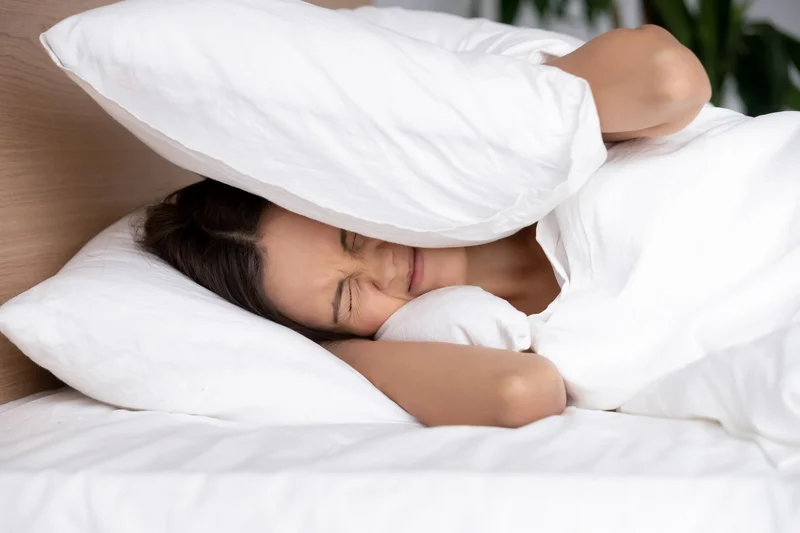
We think we can't sleep - and that's why we don't actually sleep.
This primitive functioning of our brain may still be evident today. When we're stressed or feeling less than confident, our brains may not shut down properly during sleep. The next morning we think, “I really didn’t sleep at all,” even though that wasn’t true. However, although the quality of our sleep in this state is not as good as in deep REM sleep, we mistakenly perceive this as no sleep at all.
This gap in sleep perception becomes truly problematic when we sabotage ourselves, thereby exacerbating our sleep problems. Namely, if our thoughts constantly revolve around the fact that we cannot sleep and will probably not sleep a wink again tonight, then this can really happen - or at least we perceive it that way, because we sleep not relaxed, but with a half-asleep brain.
How to break out of the vicious circle and fix the problem.
Everything is simpler than it seems: first of all, simply relaxation helps in such cases. Because if you drive yourself crazy all day in anticipation of a (supposedly) sleepless night, that's apparently what it's all about.
If you have sleep disturbances, it is important to relieve tension. And perhaps even the information about the gap in sleep perception itself helps to see it all a little more relaxed. Because ultimately, most people sleep more than they think. In addition, you can also try classic relaxation techniques such as meditation, yoga, tea or a good book before bed - anything that will help you find peace of mind.